 In the evening, we knead the biga (pre-ferment), which is made of water, flour, and yeast. Then we go home, leaving it to rest until the early hours of the morning.
 Before dawn, we return, check the dough (which doubles in volume overnight), and add the other ingredients. We knead it again and let it rest a little longer.
 Then we shape the dough, which is divided into loaves, placed inside molds where it will remain until the end of the leavening process. We bake the loaves in the molds until they are soft and fragrant. But that’s not all!
 We set the baked loaves aside to rest, to achieve the perfect balance between the moisture of the internal part (crumb) and the external one (crust). This way, we achieve the typical crunchiness and fragrance of our Fette / Veline. This process requires at least another night of patience.
 At the end of this long wait, we cut the loaves into slices which, after being toasted for a few minutes, finally become Fette biscottate / le Veline.
 We package them immediately, in order to keep their quality and taste intact, after three days of passion and patience.
In the evening, we prepare the first dough, which is made of water, flour, and yeast. We let it rest until the early hours of the morning.
Before dawn, we return, check the dough (which doubles in volume overnight), and add the other ingredients. We knead it again and let it rest a little longer.
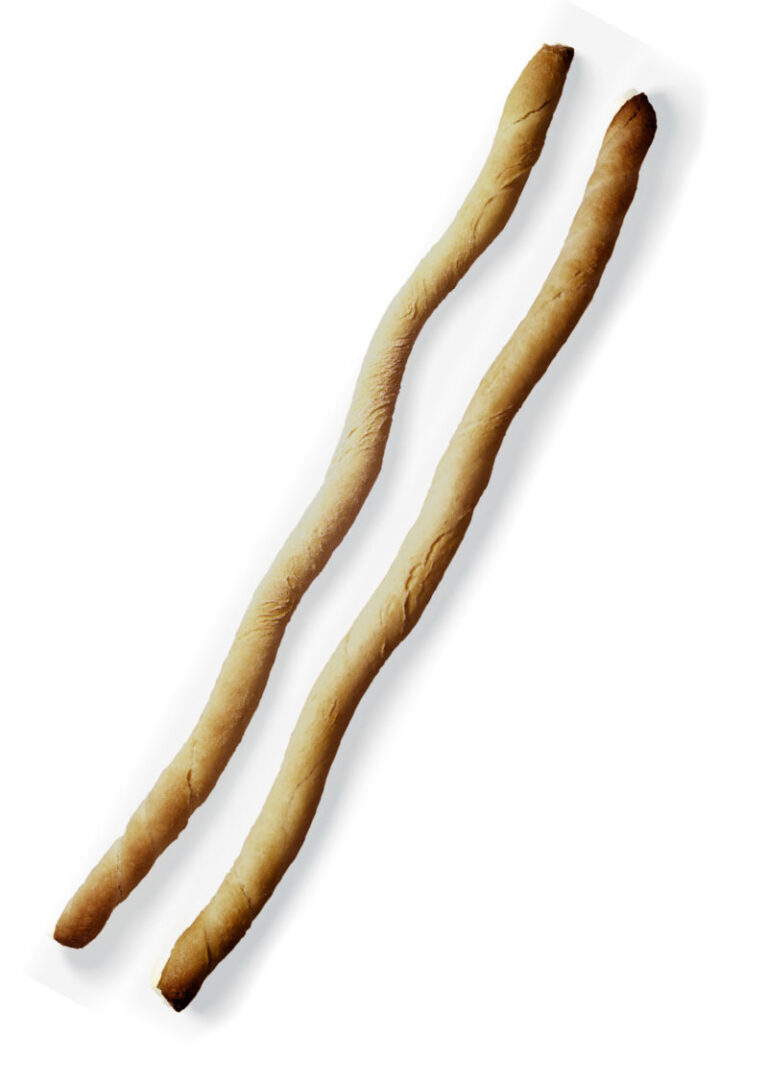
 Then we shape the breadsticks by spreading the dough on a flat surface, to achieve an even thickness. We then cut it into strips, which we roll and stretch: finally, the unique shape of our Rubatà breadsticks is achieved.
 In the end, we place the breadsticks in the oven; after a few minutes, our golden Rubatà are ready to be enjoyed.